

Creative Process
Three Music Video Budget Examples Indie Artists Can Price Line by Line
Build a music video budget with realistic tiers, line item pricing, three worked examples, and steps that account for union rates and music licensing.
By DRVVYN · · 7 min read

Realistic music video budgets vary widely, from DIY projects to label-level productions, and independent artists can tailor spending to their goals and resources. The shoot usually takes the biggest share, with post-production next, so price the concept line by line before you commit. Union minimums and music licensing can quietly change the math at the low end.
TL;DR:
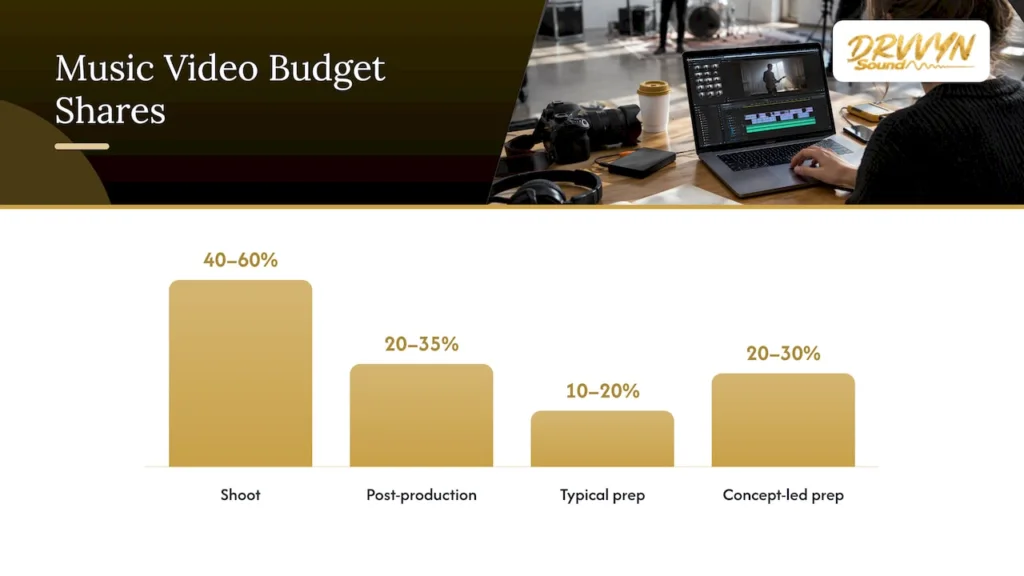
- Allocate 40–60% of the budget to the shoot, 20–35% to post, and 10–20% to preproduction; concept heavy planning can raise preproduction to 20–30%.
- Start with scenes and shoot days, price each line by quantity and rate, then add a 10–20% production fee and about 10% contingency.
- The 2026 Moderate Low Budget union rate sets covered performers’ daily minimum at $449; festival music clearance can add about $500 per side.
- When costs exceed the cap, remove a secondary location, shoot day, or extra setup before touching crew rates; protect safety, insurance, editing, grading, and contingency.
What does each music video budget tier realistically produce?
Your ambition and your money have to agree. Pick the tier that matches your career stage, then shape the concept to fit it. The ranges below are our working tiers, and the finished-output descriptions are typical, not guaranteed.
- DIY: A small team, a borrowed or entry-level camera and natural light can suit hobbyists and artists testing a sound.
- Indie pro: A director, camera operator and small helper team can create a clean, single-location concept for rising independents.
- Indie premium: A larger crew, rented cinema gear, designed sets and wardrobe can suit established independents.
- Label level: Full department heads, multiple locations, hired talent and polished post can suit label-backed artists.
For context, most professional music videos cost at least $2,000, with one cited average near $10,000 and studio-level videos often costing far more.
Where does the money actually go in a music video budget?
Read any budget as quantity × rate. Crew, gear, lighting and grip, locations and permits, production design, wardrobe, talent, post and overhead each get a line, and each line scales differently. A director of photography might be priced per day, a location per hour, an edit per week.
- Crew: Usually the largest line, because every person is a day rate times shoot days.
- Gear, lighting and grip: Rentals priced per day, so fewer setups mean smaller bills.
- Locations and permits: Free at a friend’s place, expensive on a closed street.
- Production design, wardrobe, talent: Where a modest budget can look expensive.
- Post and overhead: Edit, grade, mix, insurance and fees.
Typical splits help you sanity-check any quote:
Shoot 40–60%, post 20–35% and pre-production 10–20% of the total. Concept-driven videos can push pre-production to 20–30%, so a heavy planning phase is not a red flag. Pricing every line as quantity × rate also lets you defend each number to an artist, label or director.
What do three worked example budgets look like?
Say we scope illustrative videos at different budget levels. These are teaching examples, not market data, and the splits follow the guidance above.
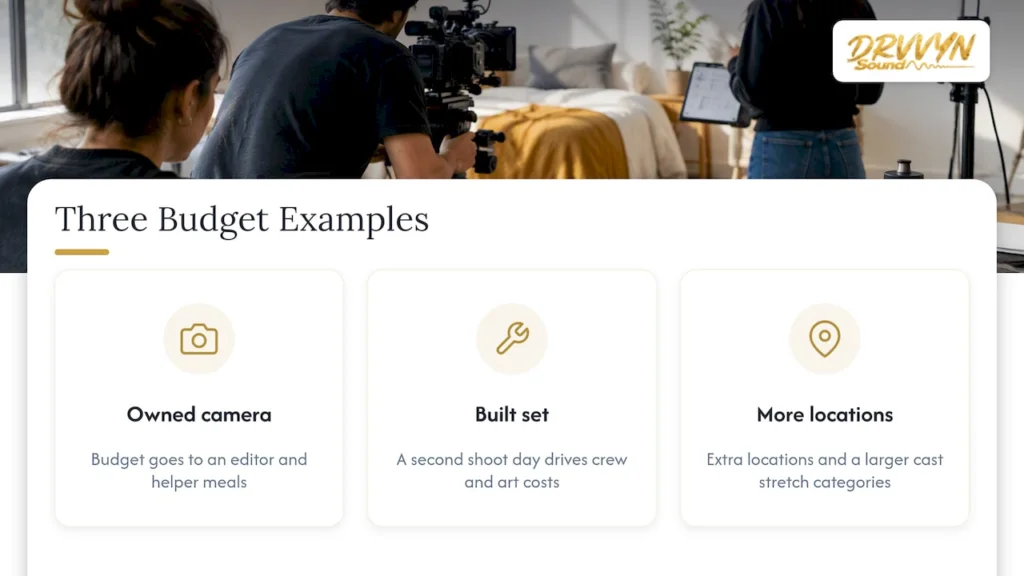
In the first, the artist owns the camera, so money goes to a hired editor and a meal for the helpers. In the second, a second shoot day and a built set drive crew and art lines. In the third, extra locations and a larger cast stretch every category. Hidden costs hide inside these rows: insurance sits under overhead, permits under locations, and music clearance belongs to the licensing budget we cover below.
How do you build a music video budget and turn it into a quote?
Start from the concept and the money available, then work down the page.
- Break the concept into scenes, shots and shoot days.
- Price each line as quantity × rate.
- Add a production fee of 10–20% and a contingency of about 10%, per CreativeBase guidance.
- Write the quote: deliverables, revision rounds, a deposit and payment schedule, change-order triggers and a validity date.
- Agree the scope in writing before the first shoot day.
A simple revision clause works well: “Includes consolidated revisions; additional rounds are billed at the agreed hourly rate.” A change order is any request that adds a day, a location or a deliverable. If you are juggling timelines too, our music project management guide covers the planning side.
Pro Tip:Show the artist the line items, not just a total. A transparent budget makes cuts a shared decision instead of an argument.
What should you cut first when the total runs over?
If the number is too high, change the concept before you squeeze people’s rates. Cut in this order:
- A secondary location or company move.
- A shoot day.
- Extra setups on the shot list.
- Specialty gear.
- Cast or extras.
- Set builds, then VFX.
Protect crew rates, safety and insurance, the edit and grade, and your contingency. Trades, favors and in-kind partnerships can lower costs, but treat them as a bonus, not a plan. Directors have long subsidized music video work with favors and donated gear, and that habit is part of why budgets get squeezed unfairly.
Which costs can’t you negotiate: union rates and music licensing?
Two baselines catch low-budget teams off guard.
- Union minimums: The 2026 Moderate Low Budget rate sheet lists minimum performer and background-actor rates, including a Moderate Low Budget daily rate of $449. Contract updates also schedule a 3% annual increase beginning July 1, 2026.
- Music rights: If you use a song you don’t own, festival-only clearances are commonly around $500 per side, publisher and master each, and you can expand media rights later.
Budget union rates if your performers are covered. Hire non-union only where it is allowed. Reserve licensing money before you shoot, and read our explainer on the needle drop license and this partner’s sample clearance workflow if samples are involved.
What should you budget for post-production and deliverables?
Post is where a good shoot becomes a finished film, so write it into the quote with the same care as the shoot.
- Offline edit and color grade
- Sound mix
- VFX and graphics
- Platform encodes, plus vertical and cutdown versions
Post time grows with shot count and effects, which is why protecting the edit and grade matters more than any prop. To save here, limit VFX, agree on a fixed number of revision rounds and batch your social exports. If you are choosing software, our CapCut vs Premiere Pro comparison can help you pick the right editing tool.
How can you stretch a small music video budget?
Smart constraints often look more cinematic than loose money does.
- Shoot in one strong location and dress it carefully.
- Plan a tight shot list to cut setups.
- Pair an affordable camera with a gimbal; guides like this one name options such as the Sony ZV-E10 II for lean budgets.
- Light with intention instead of renting big rigs.
- Trade with local creatives and use local rental houses.
- Consider AI tools, such as this AI music video workflow, or ideas from our music visualizer guide, where a full shoot isn’t realistic.
- Shoot vertical and cutdown versions during the same day, then release them with a plan like this promotion guide suggests.
Pro Tip:Spend the first saved dollar on the edit and grade. Audiences forgive modest gear faster than flat footage.
Why story beats gadgets, in our view
We’ve learned to put the story and the performance first. A great face under honest light, with a clear emotional turn, carries more than a drone shot that adds nothing. When we plan cinematic R&B visuals, we protect three things: the concept, the performance and the post. Everything else flexes. If you’d like to see how that looks on paper, we can explain our approach to budgeting. For more on the instinct behind our choices, see how we think about cinematic songs.
— DRVVYN Sound
Want help scoping a cinematic video or clearing the music?
We produce cinematic music videos and visual media for artists and brands, and we help with licensing. If you want numbers before you commit, we can discuss your concept.
- Explore our licensing and visual media services
- Discuss your project with us
- Ask about licensing support for your release
Start on our Licensing page and tell us what you’re planning. Current pricing details are on our Licensing page.
FAQ
What is a good budget for a music video?
A good budget matches your goals and career stage. Independent artists can set a budget around their goals while protecting crew pay, post and a contingency.
How much does it cost to make a music video?
Costs depend on crew size, shoot days, locations and post. Most professional music videos cost at least $2,000, and studio-level productions cost much more.
How should I split the budget between shoot and post?
Plan for the shoot to take the largest share, with post and pre-production taking the rest. Producers commonly use 40–60% shoot, 20–35% post and 10–20% pre-production as a starting guide.
What if my budget is too small for my concept?
Change the concept to fit the budget instead of cutting crew rates. Drop locations, setups or shoot days first, and keep your edit, grade and contingency intact.
Sources
- 2026 MODERATE LOW BUDGET PROJECT AGREEMENT Rate Sheet
- NOTICE: SAG-AFTRA TV/Theatrical Contract Updates (2026) – SAGindie
- How to budget a music video: process, cuts and quoting · CreativeBase
- The Fi Hall of Fame: A Filmmaker’s Guide to Music Licensing – Film Independent