
Artist Strategy
Music Brand Identity: Story First, Sticks in 3 Releases for Indies
Translate your music's emotional core into a story first sonic and visual system indie artists can test across three releases.
By DRVVYN · · 9 min read

Music brand identity is the recognition system that links your sound, visuals, voice, and behavior so listeners know and feel who you are before a song even finishes buffering. It matters because recognition, not polish, is what turns a passive stream into a loyal fan. This guide walks you through the components, the step-by-step build process, and the touchpoints where your identity either clicks or gets lost.
TL;DR:
- A strong music brand identity relies on a memorable sonic signature, consistent visuals, and clear messaging linked to an emotional core.
- Building recognition involves auditing current touchpoints, choosing a core emotion, and applying simple, adaptable visual and sonic rules.
- Priority should be given to streaming profiles, social clips, and release art, with each element aligned to ensure recognition across platforms.
- Small, intentional inconsistencies, like tone mismatches or trend-aping without a narrative, can weaken brand recognition over time.
- Success depends on strategic idea, repetition, and treating sound and visuals as ongoing assets, not costly one-off polish.
What Does a Music Brand Identity Actually Include?
Most independent artists think brand identity means a logo and a color palette. It runs much deeper than that. A real music brand identity is a set of interlocking components that all point back to the same emotional core, so a fan recognizes you whether they hit your Spotify page, a fifteen-second clip, or a merch drop.
Berklee’s framework for defining your brand identity names the essentials: your name, image, genre, logo, personality, and how you package your output. Each piece does a specific job.
- Sonic signature. A recurring texture, instrument, or production choice (a vinyl crackle, a specific reverb, a signature ad-lib) that makes a track identifiable even out of context.
- Narrative and voice. The emotional throughline in your lyrics, captions, and interviews. This is the story a fan could retell to a friend.
- Visual system. Color, typography, photo treatment, and motion style applied consistently across covers, thumbnails, and posts.
- Values and stance. What you stand for and what you refuse to compromise on, which shapes collaborations and brand deals.
- Audience relationship. How you talk to fans directly, whether that’s intimate voice memos or public commentary.
When these pieces interlock, a fan who only knows your sound will still recognize your visuals, and vice versa. That redundancy is what makes an identity stick.
How Do You Build a Music Brand Identity Step by Step?
Building an identity is not a mood board exercise. It’s a sequence, and skipping steps is why most rebrands feel hollow within a month.
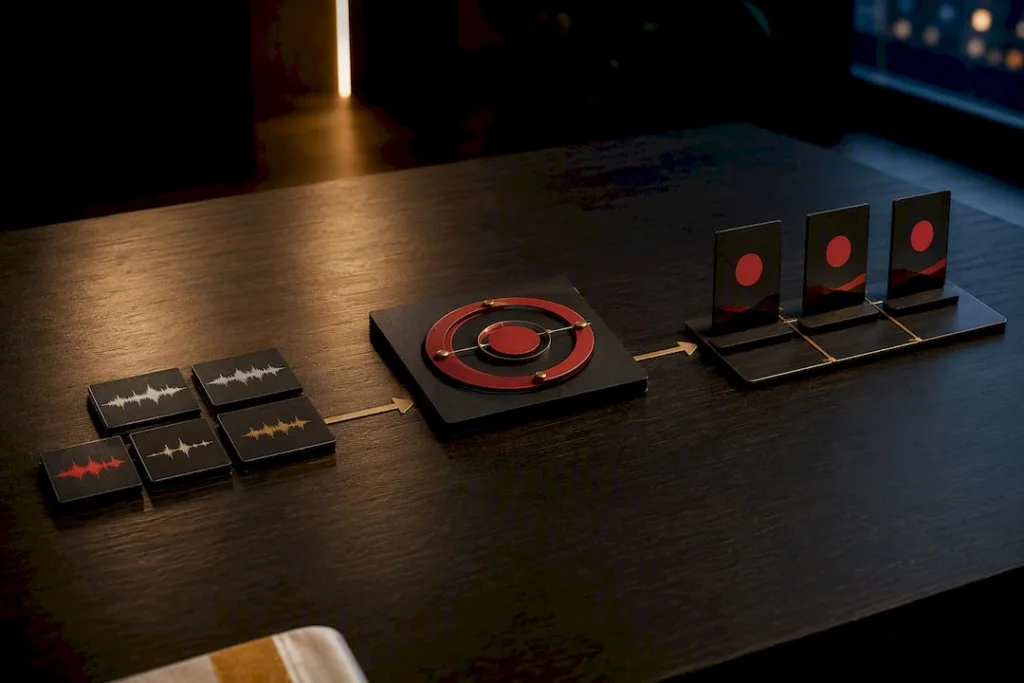
- Audit first. List every touchpoint you currently own (profiles, socials, merch, past release art) and note where the tone contradicts itself. Look at competitors and adjacent artists to find a recognition gap you can own.
- Choose your emotional temperature. Decide the core feeling your music consistently delivers (longing, defiance, calm) and the stakes behind it. Effective brand storytelling in music relies on a real narrative arc with a beginning, a conflict, and a resolution, not a vague vibe statement.
- Build the design system. Lock in two or three visual rules (a color pair, a type treatment, a crop style) you can apply to any asset in under ten minutes.
- Lock the sonic signature. Pick one or two production fingerprints you’ll carry across releases, so a blind listener could still name you.
- Write the messaging playbook. Draft your bio, caption voice, and release cadence in one document so every post sounds like the same person wrote it.
- Iterate against real signals. Track saves, comments, and repeat listens by release, then tighten whatever underperforms.
Pro Tip:Build your visual and sonic rules into a one-page cheat sheet before your next release. If you can’t apply a rule in under ten minutes, it’s too complicated to survive a real release week.
Planning this sequence around an actual release calendar keeps momentum, and a project management framework built for artists can help you sequence the audit, story, and rollout stages without losing weeks to indecision.
Where Should Your Identity Show Up First?
Identity dies in the gap between platforms, not inside any single one. Independent-artist branding works because it’s recognition-focused: the pattern across cover art, thumbnails, bios, and release pages matters more than any one polished asset.
Prioritize these touchpoints, in order:
- Streaming profiles. Your Spotify canvas, bio, and playlist covers set first impressions for cold listeners.
- Social clips. Fifteen to thirty seconds where your sonic signature has to land instantly.
- Release art. The single asset most likely to get screenshotted and reshared.
- Merch. Physical proof of the visual system, worn in public, often created through unique artist collaboration and merch experiences.
- Live presence. Lighting, setlist framing, and stage banter that echo your narrative voice.
Apple and YouTube both publish operational guidance on artist image specs, and ignoring it costs you cropped faces and blurry thumbnails on exactly the platforms fans discover you on.
| Element | Do | Don’t |
|---|---|---|
| Release cover | Use one dominant color from your palette | Introduce a new color scheme per single |
| Profile photo | Crop for a square and circular safe zone | Center text near the edges (it gets clipped) |
| Caption voice | Match the mood of the track | Switch between formal and casual tone weekly |
| File naming | Use a consistent naming convention for versions | Upload files labeled “final2_edit_USE THIS” |
Keep the system flexible enough to evolve, but recognizable enough that a fan scrolling fast still knows it’s you.
What Do Real Identity Wins Look Like?
Scale doesn’t require a major label budget, but it does require a strategic idea strong enough to survive many hands touching it. Warner Music Group’s Vision and Voice rebrand worked because it distilled the company down to one flexible visual language that scaled across dozens of teams and platforms, not a rigid style guide nobody could apply.
On the partnership side, Nordstrom’s sonic branding work with Sonic Guild shows what happens when original music gets treated as a brand asset rather than a jingle. The campaign generated millions of impressions and sustained usage across channels, proof that a distinct sound can carry a brand’s identity as hard as any visual.
Three takeaways you can reuse without a major-label budget:
- Pick one strategic idea and let visuals flex around it, rather than locking every asset to rigid templates.
- Treat your sound itself as a brand asset, not just a soundtrack to your visuals.
- Consistency across many small touchpoints beats one expensive hero asset.
What Mistakes Quietly Kill a Music Brand?
Most identity failures aren’t dramatic. They’re small inconsistencies that compound over months.
- Trend-chasing without narrative. Jumping on every sound trend without tying it back to your story. Fix it by asking whether the trend fits your emotional temperature before you post it.
- Platform mismatch. A chaotic TikTok persona paired with a sterile Spotify bio confuses new listeners. Align the tone in both places within one sitting.
- Inconsistent tone. Sarcastic captions on Instagram, earnest ones on Twitter. Pick one voice and rewrite your last five posts to match it.
- Rebranding too early. A stalled release doesn’t always mean a broken identity. Iterate on execution first; only rebrand when your core story itself has genuinely changed.
How Does DRVVYN Sound Approach Brand Identity in Practice?
DRVVYN Sound builds identity story-first: the emotional temperature of a song (love, reflection, healing) drives every visual and sonic decision that follows, not the other way around. That’s consistent with what brand storytelling research shows about narrative arcs building trust.
Typical deliverables include visualizers, release pages, and short-form video built around one consistent mood. If you want a starting point for the visual side, our visualizer idea library has copyable recipes built the same way.
Ask yourself three questions to check your own identity:
- Could a fan recognize your last three releases blind?
- Does your bio match the mood of your music?
- Is your visual system flexible or just repetitive?
Recognition Beats Polish, Every Time
Here’s the uncomfortable truth about music brand identity: the most polished release page in the world means nothing if nobody remembers it five minutes later. Fans who feel like an artist’s identity reflects something real about them are far more likely to spend money on that artist, and that kind of loyalty comes from consistency, not production value.
If you remember one rule from this entire guide, make it this: one sonic move, one visual motif, repeated on purpose. Not five perfect ideas fighting for attention. Test it for three releases before you touch anything else.
— DRVVYN Sound
Ready to Build Your Identity Instead of Guessing at It?
DRVVYN Sound approaches artist branding the way it approaches its own catalog: story first, then visuals and sound built to match. Where a typical branding agency hands you a style guide and disappears, an initial engagement here moves through a short audit of your current touchpoints, a narrative brief built around your music’s emotional core, and a pilot asset (a release page, a visualizer, a single cover concept) you can test before committing further. If you want to see what a fully realized, cinematic release presentation looks like in practice, check out Piece of Peace and get in touch to talk through what a pilot could look like for your next release.
Sources
- Music Branding for Independent Artists: Build an Identity That Outlasts the Algorithm | NotNoise
- The Power Of Brand Storytelling In The Music Industry | Forbes
- Defining your brand identity | Berklee
- Sound that sticks: inside Nordstrom’s sonic branding with Sonic Guild | Sonic Guild
FAQ
What Are the 5 P’s of Brand Identity?
Brand identity frameworks vary, but a common version covers purpose, positioning, personality, perception, and promotion, all of which apply directly to how an artist gets recognized across platforms.
What Is the 3-7-27 Rule of Branding?
This rule holds that people need roughly 3 seconds to form a first impression, making your first few seconds of a clip or cover matter more than any bio paragraph.
What Are Some Examples of Music Brand Identity?
Warner Music Group’s visual language overhaul and Nordstrom’s original sonic branding campaign with Sonic Guild both show identity built from one strategic idea applied consistently, and DRVVYN Sound applies the same story-first principle to independent releases.
What Are the 5 C’s of Branding?
Definitions vary by source, but a common version includes clarity, consistency, character, connection, and credibility, all of which map directly onto the sound, visual, voice, and values components covered earlier in this guide.
Do I Need a Big Budget to Build a Music Brand Identity?
No. A clear emotional core, one sonic signature, and two or three consistent visual rules matter more than production budget, since recognition comes from repetition, not expense.