

Creative Process
Make a Cinematic Music Video for $500: Camera Rules & Watchlists
Discover how cinematic music videos work: curated watchlists, camera as character craft, and budget-smart moves from $500 to $100,000. Includes DRVVYN…
By DRVVYN · · 12 min read
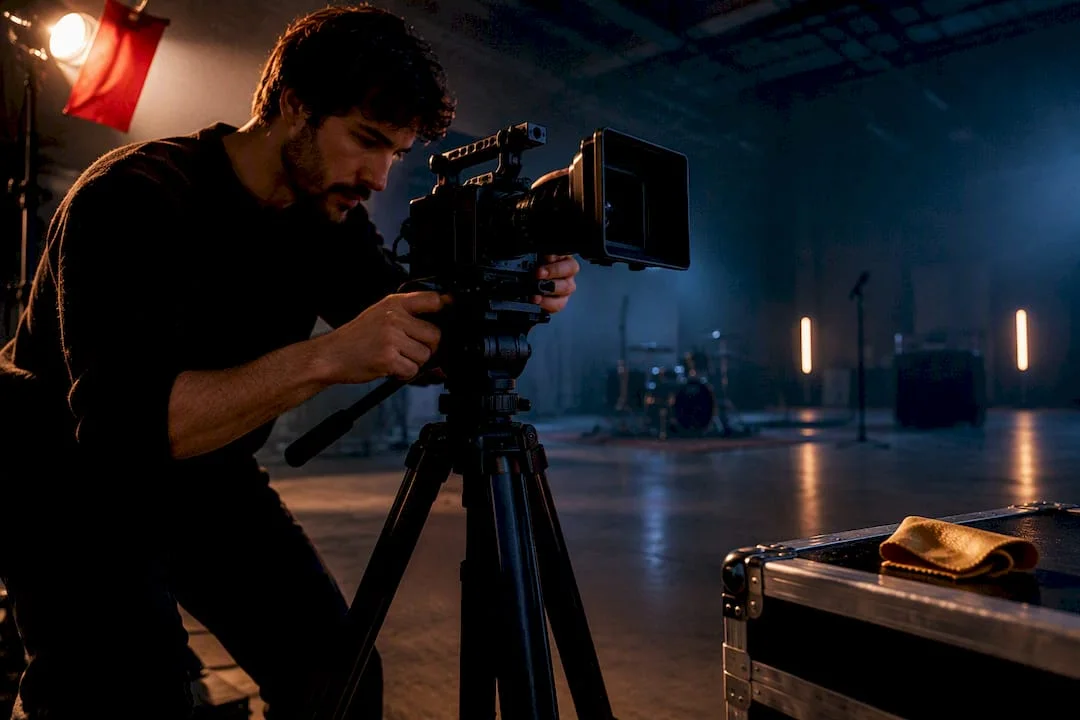
A cinematic music video treats the camera like a character, builds a visual world you can feel before you understand it, and edits to the song’s emotional pulse rather than just its beat. If you want proof right now, start with “This Is America” by Childish Gambino, “APESHIT” by The Carters, “Daydreaming” by Radiohead, and “Thriller” by Michael Jackson. Everything below unpacks why these work and how to find more.
TL;DR:
- Cinematic music videos focus on visual storytelling that emphasizes emotional rhythm and symbolic choices over mere spectacle or beat matching.
- Approaches vary from narrative epics to intimate character studies, with many leveraging pre-planning and subjective visual design to enhance impact.
- Budget-friendly techniques, like strong color grading and consistent lens use, can produce more cinematic results than expensive equipment or scale.
- Effective editing to emotional rhythm and camera as a character are crucial choices that influence a video’s ability to feel cinematic.
- Emerging AI tools are gradually integrated into production, but locking in visual references and palettes early remains essential for maintaining coherence.
Curated watchlists for every kind of cinematic mood
Different videos earn the word “cinematic” in different ways. Some build entire narrative worlds. Others hold a single face for four minutes and let a performance carry the weight. Sorting by purpose helps you find what you actually want to watch tonight, not just what critics rank highest.
Narrative epics, where the video functions like a short film with a beginning, a turn, and an ending that recontextualizes everything before it:
- “This Is America” by Childish Gambino: a single continuous performance space that keeps interrupting itself with violence and distraction, forcing you to watch two movies at once.
- “APESHIT” by The Carters: the Louvre becomes a stage for reclaiming art history, with wide symmetrical shots that treat the museum itself as a co-star.
- “Thriller” by Michael Jackson: a horror-movie-length production with its own transformation sequence, practical effects, and a director’s commentary-style opening that set the template for video as event.
Intimate character studies, where restraint and a single strong performance do the work that spectacle would in a bigger budget:
- “Sad Day” by FKA Twigs: close, textured framing that treats the body as landscape, letting small movements read as large emotional shifts.
- “Daydreaming” by Radiohead, directed by Paul Thomas Anderson: a single tracking shot through impossible connected spaces that turns a walk through ordinary rooms into a meditation on time and regret.
Experimental and AI-hybrid work, where new tools are reshaping what’s possible without a blockbuster budget:
- Recent hybrid pieces from independent directors increasingly blend traditional cinematography with AI-assisted upscaling and generative backgrounds, though the strongest ones still lock their visual references early rather than letting the tool improvise the look.
- Watch for videos that use AI generation as a texture layer under practical footage rather than as the entire image, since the seams tend to show otherwise.
Low-budget masterpieces, proof that scale isn’t the ingredient that matters most:
- Videos shot on a single strong lens in one location, with careful lighting and a locked color palette, routinely read as more cinematic than expensive productions with scattered visual ideas.
- The common thread across this is pre-production discipline: a visual thread decided before anyone presses record.
Modern auteur-driven videos, where a director’s signature style is the reason you’re watching:
- Rosalía’s “Berghain,” discussed by its director in an interview with The FADER, shows how much symbolic pre-planning goes into a video that feels spontaneous on screen.
- Floria Sigismondi’s work, including her video for Brandi Carlile’s “Returning to Myself,” builds meaning through contrast: cold architecture against open landscape, grief against renewal.
The filmmaking choices that create a cinematic feel
Cinematic isn’t a budget line, it’s a set of decisions. The camera, the color, the production design, and the edit all have to agree on the same emotional truth for a video to feel like more than a performance clip.
The camera itself can carry a point of view. Director Ashwin Gane describes treating the camera’s perspective as patient, suspicious, or calm depending on what a scene needs, syncing how the lens moves to how the song feels rather than just following the artist around. That single idea, camera as character rather than camera as recorder, separates a lot of forgettable videos from ones people rewatch.
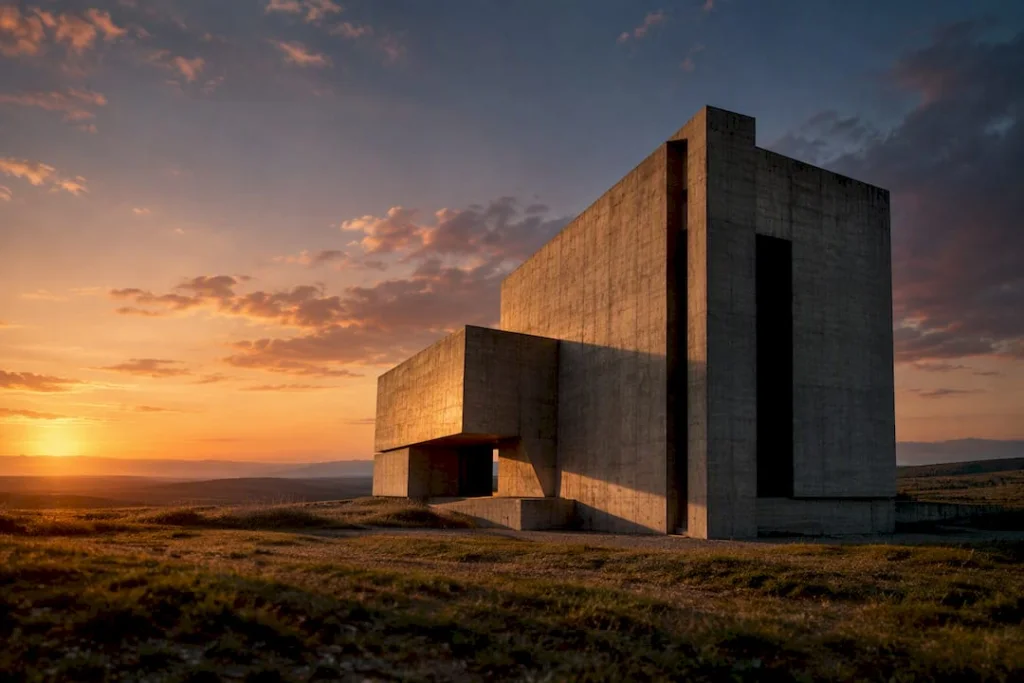
Production design does similar work through contrast and symbolism. Floria Sigismondi’s approach, as described in her work for Brandi Carlile, leans on what she calls subjective reality: placing brutalist architecture against natural landscape to express grief and transformation without a single line of dialogue. A brutalist structure against open sky can function as a visual argument about loss versus renewal, the same way a brutalist poster design uses stark geometry to signal weight and permanence before you’ve read a word.
Color grading and lighting are where the smallest budgets can punch hardest. A tight production-budget breakdown singles out color grading as a cost-effective upgrade that dramatically raises perceived production value, often more than any other single line item.
Pro Tip:Spend your last available dollars on a colorist before you spend them on a second camera. A consistent grade does more to sell “cinematic” than extra coverage ever will.
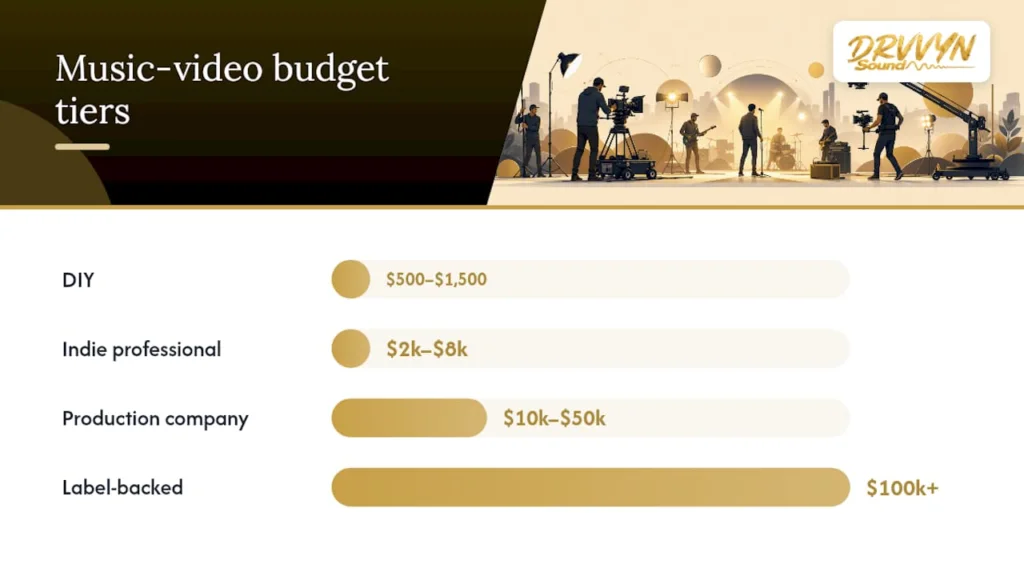
A tighter color story changes how a video reads before a viewer consciously notices why. Music video budgets cluster into four tiers: DIY runs $500 to $1,500, indie professional runs $2,000 to $8,000, production company work runs $10,000 to $50,000, and label-backed projects run $100,000 and up. Color grading shows up as a smart allocation inside every one of those tiers, not just the top ones.
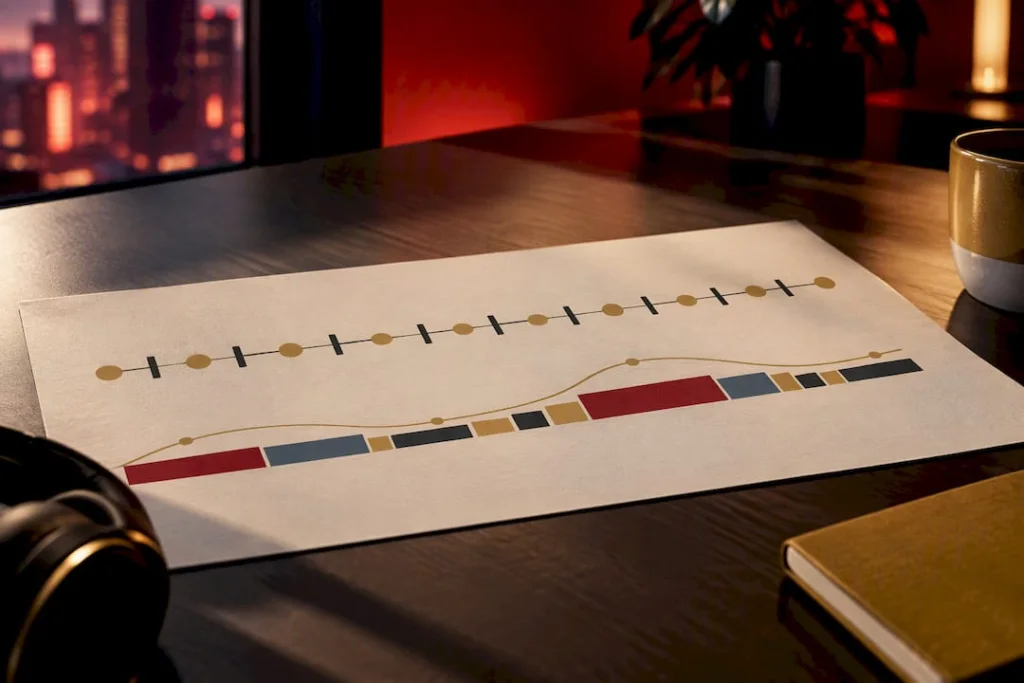
Editing to emotional rhythm is different from cutting to the beat. Cutting to the beat means every cut lands on a drum hit, which can feel mechanical past the first minute. Editing to emotional rhythm means a shot holds for as long as the feeling underneath it needs, sometimes lingering through several bars of music, sometimes cutting rapidly through a single line. Gane’s approach of syncing visual rhythm to emotional rhythm rather than metronomic rhythm is the difference between a video that feels composed and one that feels programmed.
Scale matters when a story genuinely needs scope, a crowd, a set that can’t be faked. Restraint serves emotion better almost everywhere else. A held close-up on a still face will often outlast a crane shot in a viewer’s memory.
Things to watch for when you’re studying a video’s craft:
- Whether the camera’s movement matches the singer’s emotional state or just follows blocking.
- Whether the color palette shifts meaningfully between sections of the song.
- Whether cuts speed up or slow down with the feeling of a line, not just its rhythm.
- Whether a location or object recurs as a symbol rather than just scenery.
How cinematic music videos evolved across eras
The instinct to make a music video feel like a film isn’t new, but what counts as ambitious has changed with every decade of technology and taste.
“Thriller” set an early benchmark for scale: a horror short film with makeup effects, choreography, and a framing device that turned a song into an event people gathered around televisions to watch. It proved a video could be a cultural moment on its own, separate from the song’s chart performance.
The 1990s and 2000s pushed two directions at once. Performance-driven videos leaned into the artist’s presence and persona, while a wave of directors used music videos as a proving ground before moving into feature film. David Fincher and Paul Thomas Anderson both built visual languages in music videos that carried directly into their movie careers, and Anderson’s later work on Radiohead’s “Daydreaming” shows that connection coming full circle: a single unbroken tracking shot through connected interiors that reads like a compressed short film about time slipping away.
Recent years have belonged to auteur-driven and experimental work. Rosalía’s “Berghain,” built through the kind of intensive symbolic pre-production described by its director, and FKA Twigs’s “Sad Day,” with its close, textured intimacy, both treat the video as a director’s personal statement rather than a promotional add-on. Childish Gambino’s “This Is America” belongs in this same recent wave, using a deceptively simple single-space setup to carry a much larger argument.
A newer thread worth watching cautiously: AI-hybrid production. Early experiments blend generative imagery with traditional footage, but the strongest results still come from locking a visual reference and color palette before anyone touches an AI tool, treating it as an enhancement layer rather than the director.
Notable shifts across eras, at a glance:
- 1980s: scale and spectacle, narrative ambition as a novelty worth investing in.
- 1990s to 2000s: director-driven style, with music videos as a launchpad into film.
- 2010s to now: intimate, symbolic, auteur-signed work built around a single strong idea.
- Emerging: AI-assisted texture and effects layered under practical, camera-shot footage.
Making a cinematic video on a real budget
Most of the difference between a cinematic video and a flat one gets decided before a camera ever rolls. Here’s the order that tends to matter most, cheapest decisions first.
- Lock the visual world before you shoot: a short treatment, a single visual thread, and a camera language (how it moves, what it avoids) settled on paper first.
- Prioritize a colorist over a second camera or extra crew member. As the four-tier budget breakdown shows, grading consistently delivers more perceived production value per dollar than almost any other line item, whether you’re working a $500 DIY budget or a $50,000 production-company one.
- Shoot with a single strong lens rather than switching glass constantly. Consistency in optics reads as intentional even when the location is plain.
- Match frame rates across every camera you use and shoot in a log profile with a LUT applied for on-set monitoring, both steps PetaPixel walks through in detail for creators working without a full crew.
- Use simple speed tricks, like shooting faster than playback speed, to get cinematic slow-motion lip-sync without specialized high-speed camera gear.
Pro Tip:If you can only afford one upgrade this project, make it color grading. It’s the cheapest way to make a single location look considered rather than convenient.
Distribution decisions belong in the plan from day one, not after the edit. A video aimed at sync licensing needs clean, dialogue-free stretches; one aimed at festival submission needs a runtime and aspect ratio that match festival norms; one built for fan acquisition needs a strong opening five seconds that works muted on a phone screen. Decide which job the video needs to do before you decide how it needs to look.
Where to find more cinematic videos worth studying
Curated playlists and editorial roundups remain the fastest way to expand a watchlist beyond what an algorithm happens to surface. Communities built around cinematography, including threads on Reddit, regularly surface work that never trends but holds up under close study.
Director interviews are where the real craft breakdown happens. Outlets like The FADER and LBBOnline routinely publish conversations where directors walk through specific shot choices and symbolic decisions scene by scene, which teaches more than watching the finished video alone ever could.
Build your own study list with search phrasing, not just an artist’s name:
- Search by director or cinematographer, since a single visual signature often spans dozens of videos across different artists.
- Pair every watch with a short notebook entry: what the camera did, how the color shifted, and where the edit slowed down or sped up.
- Playlist curation strategies built around mood rather than genre tend to surface more cinematic matches than genre-based browsing.
Why DRVVYN Sound curates this way
DRVVYN Sound produces original R&B releases alongside cinematic visuals, visualizer concepts, and playlists built around emotional storytelling rather than trend-chasing. Curation here comes from making these choices directly, not observing them from the outside.
A closing thought on why the camera matters as much as the song
A cinematic video doesn’t decorate a song, it finishes a thought the lyrics started. Rewatch one video from this list with a single question in mind: what is the camera doing when the singer isn’t the only thing on screen? That answer usually holds the video’s actual argument.
— DRVVYN Sound
Licensing cinematic music for your next project
If you’re a creator who needs music built to carry visual weight rather than sit behind it, DRVVYN Sound’s licensing services offer original R&B tracks shaped with the same emotional rhythm this article describes.
- Original releases scored for pacing, mood shifts, and visual storytelling rather than generic background use.
- A direct route to licensing without sorting through catalog libraries built for volume instead of feeling.
Check the licensing page for current availability and terms.
Sources
- Flip Dat Breaks Music Video Conventions in Cinematic Trap
- How to Film a Simple Music Video, From Start to Finish | PetaPixel
- How to budget music video: four tiers
- In ‘Returning to Myself’, Floria Sigismondi Crafts an Elegiac Tale of Contrasts for Brandi Carlile
- Director Nicolás Mendéz explains Rosalía’s “Berghain” music video | The FADER
FAQ
What is the best song for a cinematic video?
There’s no single correct answer, since songs with clear emotional turns, dynamic shifts, and space for visual pacing tend to work best. Tracks with a strong narrative arc or a mood that changes across sections, rather than staying flat, give a director the most to work with.
What is cinematic music called?
There’s no single official genre label, since “cinematic” describes a quality, not a genre: sweeping, emotionally textured music often built with orchestral or atmospheric elements. It’s commonly used to describe both film scores and songs that borrow that mood, including tracks meant for music videos.
What are the top 10 best music video clips of all time?
Rankings vary widely by publication and taste, but videos like “Thriller” by Michael Jackson, “This Is America” by Childish Gambino, “APESHIT” by The Carters, and “Daydreaming” by Radiohead consistently appear across critical lists for their narrative ambition and visual craft. Editorial roundups from outlets like No Film School regularly feature this same core group alongside more personal, director-led picks.
What is the number one music video of all time?
There’s no single agreed-upon ranking, since the answer shifts depending on whether a list prioritizes cultural impact, production ambition, or visual innovation. “Thriller” is frequently cited for its historic scale and influence, while more recent lists often place “This Is America” at or near the top for its narrative density and cultural resonance.