

Creative Process
Cinematic Music Video Ideas for Indie Artists
Cinematic music video ideas for independent artists: concepts that work on a small budget, how to plan the shoot, and the music rights to settle before you film.
By DRVVYN · · 11 min read
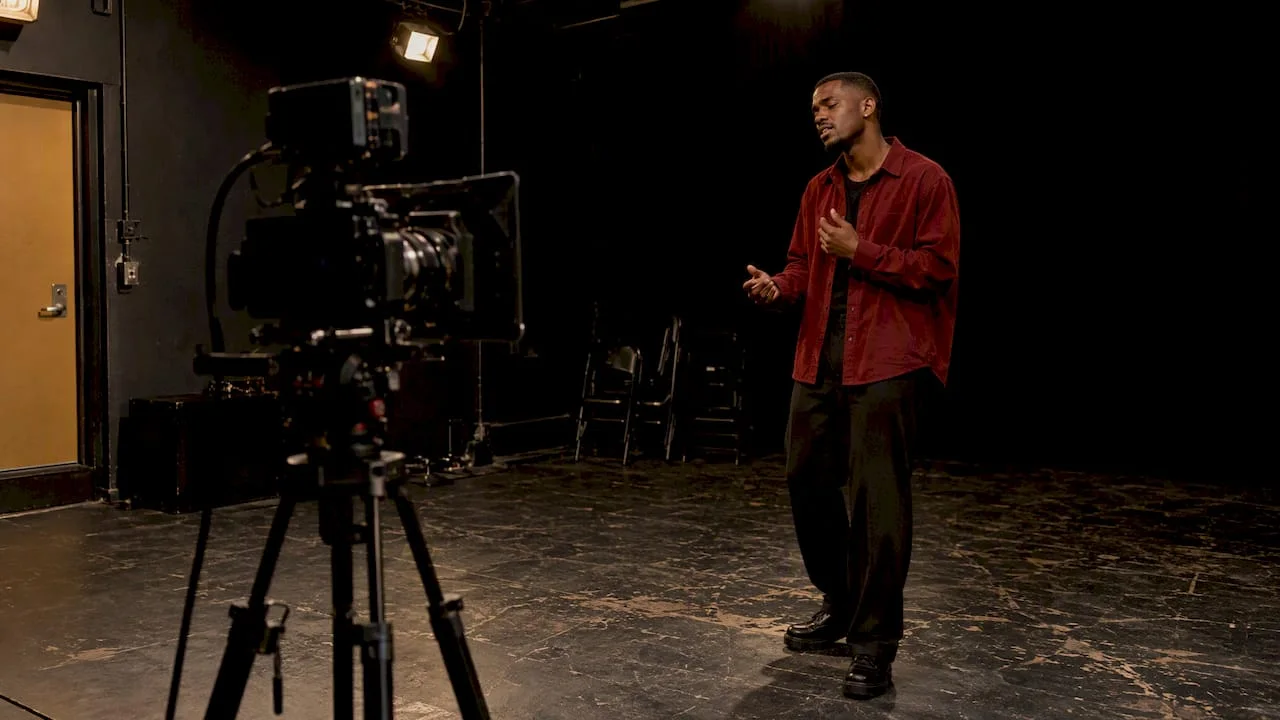
A cinematic music video is not a big budget. It is a feeling you can hold onto: one world, one emotional thread, and a camera that moves when the song moves. The ideas below are built for independent artists, especially in alternative R&B, who want a video that lingers and who may be filming with a small crew, one location, and a lot of intention.
TL;DR
- Pick one strong world (a room, a car, a rooftop, a shoreline) and let light, distance, and performance carry the story.
- Write your concept as one emotional sentence and one visual rule before you book anything.
- Tie visual changes to exact moments in the song, then rehearse them. That is where “cinematic” comes from.
- Settle music rights and your intended platforms before the shoot, not after the edit.
- Test the idea with stills or a rough prototype so pacing problems show up before shoot day.
Start with what the song already feels like
Before ideas, a quieter question: what does this song feel like when you close your eyes? Grief that has gone numb? A late-night text you didn’t send? Anger that has finally softened into something you can look at?
Director Andrew Hines makes the point in Backstage’s guide to making a music video that a filmmaker is often hired to bring an artist’s existing vision to life, not to overwrite it. The same goes when you are the artist and the director. The strongest treatments begin by clarifying the song’s inner weather, and only then add spectacle.
A concept becomes shootable when you can reduce it to three things:
- One emotional sentence. “She is learning to stay in the room with the silence.”
- One visual rule. “The camera never leaves the apartment.” Or: “Light is the only thing that changes.”
- A few repeatable motifs. A hand on a window, a door left open, a lamp turned on and off.
That is the filter for every idea below. If it can’t be said in a sentence, it will be hard to film in a day.
Why one world beats many locations
It is tempting to chase variety: five locations, three wardrobe changes, a drone shot. Most independent budgets can’t carry it, and most songs don’t need it. The sample director’s treatment on Treatment.media is built around one golden hour and one figure who won’t hold still, with the light doing the changing. That is a useful model: a single location doesn’t mean a static video.
You can create progression inside one place by changing:
- Camera distance: wide and observing in verse one, close and almost uncomfortable by the bridge.
- Light direction: window light from the side, then a practical lamp, then darkness.
- Performer state: composed, then unraveling, then released.
- Production design: a tidy room that slowly gets disrupted, or a bare room that fills with objects.
Think of it as a beginning, a pressure point, and a release. For emotionally driven R&B, that arc is already the shape of the song.
Cinematic music video ideas by emotional state
The concepts below follow the kinds of structures that show up in contemporary treatments: a one-location transformation, a figure moving through changing light, a state-portrait built on a repeated gesture, memory fragments, performance interrupted by narrative, and a motif that changes meaning by the final chorus.
For heartbreak that lingers
The one-room unraveling. Shoot in a single apartment across what feels like one long night. Open with the space pristine and the artist composed. With each chorus, something shifts: a chair moved, a coat on the floor, a phone face-down then face-up. By the last chorus the room looks lived in and the artist looks lighter. The rule is simple: the camera never leaves.
The repeated gesture. Build a state-portrait around one small action, such as putting on a ring, taking it off, and holding it. Repeat it three or four times with slightly different framing and light. By the final chorus the same gesture reads as letting go instead of longing. It costs almost nothing and rewards close-up work.
For late-night reflection
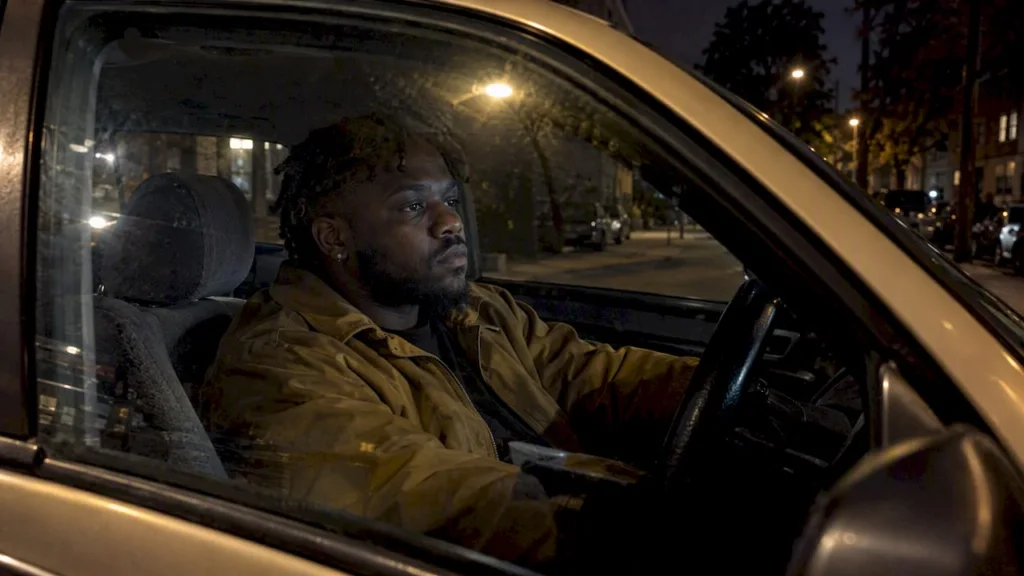
The car at 2 a.m. A parked or slowly moving car is a natural cinematic frame: reflections on glass, passing streetlight sweeping across a face, a dashboard glow as your only key light. Keep the performance restrained, mostly looking and breathing between lines. If you shoot it moving, plan safety and permits carefully and use a stationary or properly rigged setup rather than improvising on public roads.
The rooftop city hush. Choose a rooftop you can legally access and shoot from blue hour into dark. The shift from fading daylight to city lights does your transformation for free. Let the artist sit with the skyline instead of singing at it.
For healing and release
Day-to-night switch. Cut from a muted, overcast scene to a warm, golden one at a lyric or sonic change, such as when the drums finally enter or the harmony opens. The contrast carries the emotion without a single line of dialogue.
The shoreline walk. One figure, one stretch of beach or lakefront, one continuous pace. Let the tide and the weather be your set design. Pair it with slow motion on the chorus for a sense of suspended time.
For memory and numbness
Memory fragments. Intercut the present performance with short, imperfect flashes: a hand, a doorway, a dinner table. Keep them brief and slightly out of focus, so the viewer feels memory instead of reading a plot. Repeat one fragment until it means something different at the end.
Performance interrupted. Start with a straightforward performance in a lit room, then let narrative action break in, such as a knock or a lamp flickering out. The song continues but the room has changed. It is a good way to add story without adding locations.
Techniques that make it feel cinematic
Good ideas turn cinematic through craft. A few approaches that repeatedly work:
- Sync the image to specific musical events. In the making of Radiohead’s “Man of War”, described by Filmsupply, movement and camera behavior were timed to exact moments in the music. Strong videos often change the picture at a lyric or sonic shift rather than cutting on every beat.
- Use slow motion deliberately. It generally means recording the performance and playing the track back at matched altered speeds, so plan it in advance.
- Choose one-shot staging when the song can carry it. A long take asks for rehearsal, repeated marks, and cue tracks. The apparent effortlessness is built.
- Let color say something. We wrote about this in color’s role in music visuals: a palette is an emotional decision, not decoration.
- Watch how motifs evolve. Studying how images change meaning across a sequence helps. These montage examples broken down shot by shot are a good place to see how repeated visual ideas gain weight.
Oxford’s chapter on music video’s cinematic soundscapes points to the same principle: cinematic impact comes from the relationship between image, sound, atmosphere, and emotional timing. The goal isn’t to make every shot impressive. It is to let the viewer feel a thread between the song’s inner world and the screen.
Planning the shoot so the idea survives reality
Poetic treatments and expensive improvisation differ by precision. Here is a practical order of operations, drawn from the sequence in the Backstage guide:
- Define the concept and aesthetic. Use your emotional sentence and visual rule.
- Write a short treatment. Synopsis, tone, references, motifs.
- Storyboard or prototype. Test with stills or rough phone footage. Pacing problems show up here, before they cost you a shoot day.
- Assemble the team. Roles can include director, cinematographer, gaffer, grip, makeup, costume, choreographer, performers, and editor. A solo DIY artist can combine roles, but each added ambition increases coordination.
- Lock locations and wardrobe, then make call sheets.
- Shoot with the finished recording playing on set so performers can hit lyrical and musical cues.
- Edit.
Map your transitions and visual changes to song timecodes. Then decide ahead of time which shots disappear if light, weather, or location access fails. A backup plan is not a loss of vision. It is what lets the vision get finished.
If you are juggling release dates, collaborators, and deliverables, our guide to music project management for artists can help you keep the video from swallowing the rest of the campaign.
Settle the music rights before you shoot
This is the part nobody wants to think about, and the part that can quietly sink a finished video.
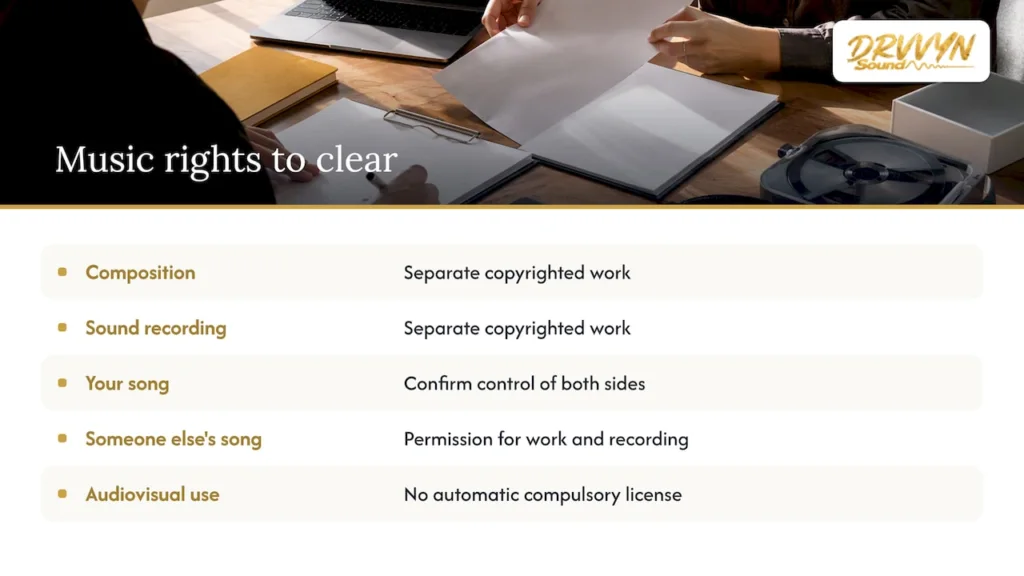
In the United States, the composition and the sound recording are separate copyrighted works. The U.S. Copyright Office’s overview for music creators treats synchronization and master-use licensing as negotiated rights for audiovisual use. If the song is yours and you wrote and recorded it, you still need to confirm who controls both sides, including any co-writers, producers, or a publisher. If you use someone else’s song, you normally need permission for both the musical work and the recording before you publish. There is no automatic compulsory license for audiovisual use.
ASCAP’s checklist for using music in film and other audio-video content frames this as project design. Decide whether you are making a personal upload, a monetized release, a branded piece, or something meant to be licensed later. A request typically describes whether the song is foreground or background, where it appears, how long it plays, how often it returns, and where the video will be shown. ASCAP notes that fees vary with those factors and are negotiable rather than standardized, so no one can give you a fixed number in advance.
Writing down your intended platforms before you shoot is a habit worth building, and this piece on documenting where a video will be distributed shows why it matters for short-form creators. For a deeper look at one common license type, see our explainer on the needle drop license.
If you plan to cast union performers
If you cast SAG-AFTRA performers, an independent artist may need to apply as a One Production Only signatory before auditions, and performer payments and production reports carry specific obligations. The SAG-AFTRA music video page is the place to start. Resolve it before casting, not in post.
Our perspective: make the video feel like the song sounds
We make alternative R&B and the visuals that go with it, so we come at this from both sides of the screen. What we keep coming back to is that a cinematic video isn’t an upgrade you buy. It is a decision about restraint.
The songs that stay with people tend to hold tension without hurrying to resolve it. The best visuals do the same. They let a room feel suspended, let a silence stay sharp, and then give the viewer a release that feels earned. That is why we lean on a small number of images, repeated with care, over a pile of impressive shots. If you are curious why that approach works on listeners, we explored it in why music that feels cinematic stays with us and in our alternative R&B production style guide.
If the full video isn’t in reach yet, a visualizer is a legitimate first step, and our music visualizer ideas include copyable recipes.
— DRVVYN Sound
When you want a second set of eyes
DRVVYN Sound produces original alternative R&B, cinematic visual content, and music for licensing. If you are building a video around a track and want to understand how licensing works with our catalog, start on our licensing page. We don’t publish a price there, so reach out with your project details: platform, duration, and how the song will be used.
A short checklist before you call it ready
- Can you say the concept in one emotional sentence?
- Is there one visual rule the whole video obeys?
- Do at least three moments in the song trigger a visible change?
- Have you rehearsed those moments with the track playing?
- Do you know which shots to drop if light or access fails?
- Do you know who controls the composition and the master, and where the video will live?
If you can answer yes to most of these, you have something better than a big budget: a plan with a pulse.
FAQ
How do you film a music video on a small budget?
Choose one location and build the story with light, camera distance, and performance instead of travel and gear. Prototype with stills or phone footage, write a shot list tied to song timecodes, and play the finished track on set so you hit your cues. A solo artist can combine roles, but keep the ambition proportional to the crew.
What is a cinematic song?
It is a song that creates imagery on its own, through atmosphere, space, and emotional timing, so you almost see a scene while listening. There is no formal definition. If you want to explore the idea, our guide to discovering cinematic songs that stay is a good place to begin.
Do I need permission to use my own song in a music video?
Often you control it, but confirm it. The composition and the sound recording are separate works under U.S. copyright, so check any co-writer, producer, label, or publisher agreements. For anything unclear, a music attorney or your performing rights organization can help; our comparison of ASCAP and BMI may help with the latter.
Does a cinematic video have to be expensive?
No. The cinematic feeling comes from consistent light, deliberate framing, and visuals synced to the song’s emotional shifts. A single room, a car, or a rooftop shot with a plan will usually beat a scattered multi-location shoot.
Sources
- How to Make a Music Video: Keys to Shooting and Editing, Backstage
- A Film About Becoming, Director’s Treatment (Example), Treatment.media
- The Making of Radiohead’s “Man of War” Music Video, Filmsupply
- Listen Again: Music Video’s Cinematic Soundscapes, Oxford Academic
- Recording and music creators overview, U.S. Copyright Office
- How Songwriters, Composers, and Performers Get Paid, U.S. Copyright Office
- A Checklist for Using Music in Film or other Audio-Video Content, ASCAP
- Music Videos, SAG-AFTRA